Unit 9: AI System Design for Trust, Safety & Accountability
Clarity of Purpose
Design for a clear and documented use case.
Avoid unnecessary features that increase risk or confusion.
Example: A resume screener should not analyze facial expressions.
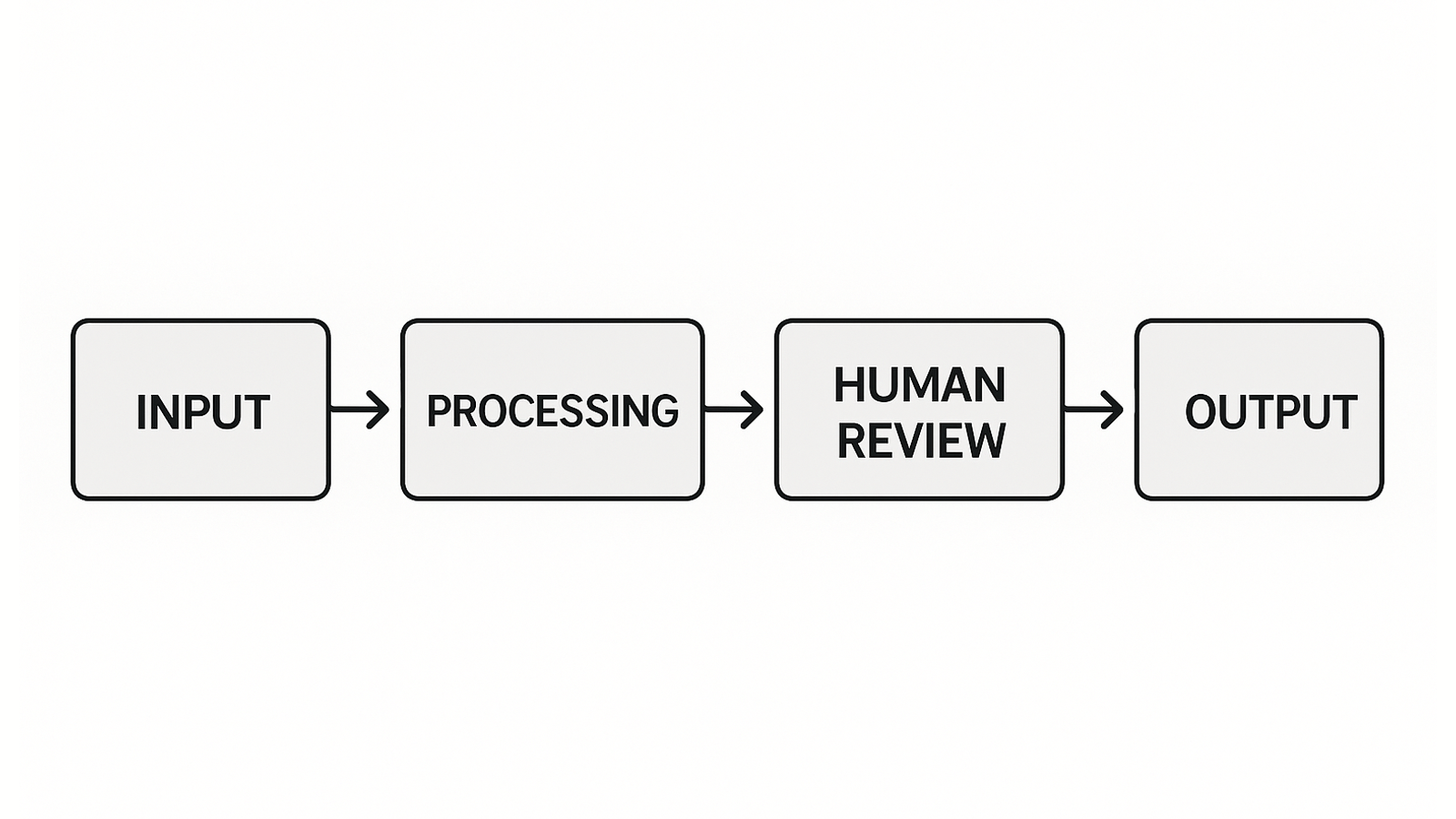
Built-In Human Oversight
Add checkpoints where humans can review or override decisions.
Document escalation paths and who has authority to intervene.
Explainability & Transparency
Use interpretable models where possible.
Make it easy to explain how an output was generated to business users and customers.
Logging & Traceability
Track what went into the model, what came out, and who reviewed it.
Logs = your AI receipts.
Fail-Safes & Thresholds
Include safety triggers, rollback options, and flags for weird behavior.
Design for failure, not perfection.